



Master of Arts in Clinical Mental Health Counseling
Develop the skills to become a compassionate professional counselor in Naropa University’s new 60-credit Clinical Mental Health Counseling (CMHC) MA program, which combines CACREP-aligned training with unparalleled flexibility and a more affordable tuition structure.
Program Overview
This three-year program empowers students to build their unique clinical identity. The streamlined 60-credit model delivers the essential 48-credit core counseling courses while embedding 12 flexible elective credits directly into the degree.
Students can use these 12 credits to explore diverse therapeutic approaches or to earn distinct professional certificates in areas including our previous concentrations.
Certificate Options
Certificates are designed for students concurrently enrolled in the 60-credit Master of Arts in Clinical Mental Health Counseling. Twelve elective credits are included in the 60-credit degree. Additional credits beyond 60 that may be required for a certificate are not covered by financial aid. Please note that some certificates are offered on campus only.
- Somatic Counseling (low-residency & residential): 14 credits
- Dance/Movement Theories & Practice (residential): 15 credits
- Nature-Based Transpersonal Counseling (residential): 12 credits
- Mindfulness-Based Counseling (low-residency & residential): 12 credits
- Transpersonal Counseling (low-residency & residential): 12 credits
- Buddhism-Informed Counseling (residential): 14 credits

Quick Facts
- Affordability: Features a substantially more affordable tuition structure
- 60-credit Program: including 48-credit CACREP-aligned core curricula & 12 elective credits or 12–15 certificate credits
- Delivery Formats: Residential or low-residency format
- Clinical Placements: Access to 80+ diverse agency settings for practicum & internships.
- Field Experience: Complete 700+ hours of hands-on practice at Clinical Mental Health Counseling sites.
- Licensure: Prepares graduates for licensure (LPC/LPCC) in Colorado and most other states.
- Credentialing Guidance: Personalized licensure and credentialing support for current students and alumnx via a dedicated Licensure/Credentialing Specialist
- Applications open for Spring, Summer & Fall 2027

Program Format
This program is a three-year MA pathway designed to offer maximum flexibility and affordability for students. Delivery is available in both residential and low-residency formats (Note: Some certificates are residential only).
The Clinical Mental Health Counseling program encourages introspection and mind/body awareness as well as a holistic approach to the development of professional counselors. The MA in Clinical Mental Health Counseling degree is uniquely designed to balance personal and professional development. You’ll graduate with a stronger sense of self and the confidence to use a social justice framework in supporting individuals, families, and communities in need.

Course Spotlight
Group Counseling: Dynamics & Leadership
This clinical mental health counseling course examines the history, theories, models, and research of group counseling and group dynamics. Emphasis is placed on clinical mental health group counseling skills and techniques. The course includes at least 10 hours experiential participation as a group member. Additionally, students will also gain experience and practice as a group leader with supervision, feedback, and guidance.
Degree
Requirements
This three-year program empowers students to build their unique clinical identity. The streamlined 60-credit model delivers the essential 48-credit core counseling courses while embedding 12 flexible elective credits directly into the degree.
This program is offered in both a low-residency and on-campus format.
MA in Clinical Mental Health Counseling Requirements
Low-residency courses are designated with an E (CMHC-600E, CNSS-646E, etc.)
Core Counseling Courses: 48 credits
CMHC-600/600E Foundations & Orientation of Clinical Mental Health Counseling (3)
This course must be taken in the students’ first or second semester of enrollment. Topics include philosophy and identity of the counseling profession, professional roles, settings and functions, ethics, history, legislative policies, systems, prevention programs, interventions, social justice and multicultural counseling competencies, fiscal, technology, community resources, consultation, counseling supervision, advocacy, assessment, and evaluation.
CMHC-601/601E Social/Multicultural Foundations (3)
This survey course explores the role of the counselor embedded in the milieu of the social and cultural realities of society. Topics concerning work with families from diverse cultures are discussed, including the counselor’s role in social justice, advocacy and conflict resolution, cultural awareness, the nature of biases, prejudices, processes of intentional and unintentional oppression and discrimination, and other culturally supported behaviors that are detrimental to the growth of the human spirit, mind, or body.
CMHC-602/602E Human Growth and Development (3)
The study of human development from prenatal experiences through the life span. Topics include individual and family development, theories of learning, personality development, motivation, and neurobiological basis for behavior. Students explore developmental crises, transitions, disabilities, situational, cultural, and environmental factors impacting behavior. Models of resilience are examined.
CMHC-603/603E Counseling and Helping Relationships I (3)
Introduction to counseling theories, core skills, and the professional practice of counseling. Topics include current counseling theories, social justice and multicultural counseling competencies, basic attending, compassion, nonjudgmental states, and legal and ethical considerations. Methods of instruction include in-class roleplay, integration of peer and faculty feedback, and skill practice with peers.
CMHC-604/604E Counseling and Helping Relationships II (3)
This course builds on the content and skills presented in CMHC-603. Topics include crisis intervention, suicide prevention, suicide assessment strategies, as well as the use of psychological first aid. Students continue to develop their theoretical orientation, understanding of the stages of therapeutic relationship, and engage in video-taped practice sessions with supervision and integration of feedback.
CMHC-605/605E Group Counseling (3)
This course examines the history, theories, models, and research of group counseling and dynamics. Emphasis is placed on clinical mental health group counseling skills and techniques. Instruction includes at least 10 hours of experiential participation as a group member. Students gain experience and practice as a group leader with supervision, feedback, and guidance. Students critically examine group counseling approaches through lenses including diversity, power, and social narratives.
CMHC-606/606E Legal and Ethical Aspects of Counseling (3)
This course explores the interrelationship of and duties extending from the ethical standards and legal regulations governing professional counseling and clinical mental health counseling. Based on the American Counseling Association ethical standards, mental health laws, regulation, litigation, and legal regulation are examined in regard to professional practice.
CMHC-607/607E Diagnosis and Treatment Planning (3)
An advanced overview of clinical thinking and perspectives related to assessment, diagnosis, and treatment planning. Counselors utilize the latest edition of the Diagnostic and Statistical Manual of Mental Disorders as a guide to frame diagnostic thinking. Topics include basic psychopharmacology, psychosocial modalities, evidence-based practice, and recovery strategies.
CMHC-608/608E Assessment (3)
This course provides an overview of individual and group approaches to assessment and evaluation. Topics include standardized and non-standardized testing, assessment techniques (inventories, observations, and computer-managed methods), report writing, psychometric properties, special consideration for unique populations, case conceptualization, legal and ethical issues, intersectionality, and selection of assessments based on client needs and identities.
CMHC-609/609E Research & Program Evaluation (3)
An introduction to research methods and program evaluation applied to professional counseling. Topics include philosophical issues in research, importance of research, opportunities, and difficulties of conducting research. Research designs including qualitative, quantitative, single-case, action, and outcome-based are explored.
CMHC-610/610E Career Development (3)
This course addresses career counseling, career planning, and adult transition from a holistic and transpersonal point of view. Students learn the central theories of career development. Key assessment instruments for life/career planning and decision-making are reviewed. Career counseling skills and processes are explored, including those applicable to specific populations. Topics include the interrelationships between work, family, and other life roles, including the role of social location in career development. Ethical and legal considerations, career development programming and evaluation, occupational and labor market information, and web-based resources are studied.
CMHC-611/611E Substance Abuse & Addictions Counseling (3)
The physical, mental, emotional, and spiritual aspects of alcohol and drug dependency and other addictive behaviors are explored. Assessment, therapeutic techniques, intervention, and treatment modalities are discussed. Students explore the contributions, as well as the strengths and weaknesses, of 12-step and other self-help recovery groups. The interrelationships of alcohol and drug abuse and other addictive behaviors with attachment and bonding disruptions in early childhood and childhood trauma are also investigated. Lecture, discussion, role-play, and other experiential techniques are used.
CMHC-612/612E Couples, Partnerships & Family Counseling (3)
Drawing from a systems approach, students learn how to shift their focus from the individual to the dynamic interplay between people in relationships. The course focuses on collaborative approaches that promote healthier functioning, strengthen emotional bonds, and enhance communication and problem-solving skills. Family systems theories are presented along with principles, assessment, interventions, and challenges related to Family, Marital, and Relationship Counseling. Students explore their own family of origin as a ground for working with others. Also covered in this course are special considerations in working with social class, race, ethnicity, physical disability, trauma and abuse, culture, gender, and sexual orientation. The course consists of lecture, student presentations, class discussions, and experiential exercises.
CMHC-620/620E Counseling Practicum (3)
Prerequisites: CMHC-604 & 606. This course is the initial external clinical placement. Under site supervision, students apply counseling skills, consultation, group skills, case conceptualization, treatment planning, and social justice advocacy. Students will engage in direct services to clients, intake interviews, case notes, diagnosis, and treatment planning.
CMHC-622/622E Internship I (3)
Prerequisite: CMHC 620. This course supports field experience in which students provide direct counseling services under licensed supervision at an external site. Students attend university supervision as well to explore case conceptualization, client services, and their professional development.
CMHC-623/623E Winter Intercession Internship (0)*
This course supports field experience in which students provide direct counseling services under licensed supervision at an external site. This course is for students who have completed Internship I and have not yet begun Internship II. The purpose of the course is to provide clinical support and supervision to students who are asked by their site to continue working with clients from their Internship I experience and prior to the start of Internship II.
CMHC 624/624E Internship II (3)
Prerequisite: CMHC 622. Continuation of CMHC 622. Culminating field experience in which students provide direct counseling services under licensed supervision at an external site. Over the course of Internship I and II, students are to achieve a total of 700 hours, of which 350 need to be direct service to clients. Students attend university supervision as well to explore case conceptualization, client services, and their professional development.
Electives Courses: 12 Credits
Students may use these credits to customize their education or apply them toward one of six specialized certificate programs. Note that certificate requirements vary from 12 to 15 credits; any certificate credits beyond the 12 allotted elective credits will require out-of-pocket payment.
Total Credits: 60
Sample Plan of Study
MA in Clinical Mental Health Counseling (Residential & Low-Residency)
Disclaimer: The following is a sample degree plan. Actual course sequencing may vary based on course availability. Students must work closely with their academic advisor to map their specific path. Low-residency courses are designated with an E (CNSM-602E, CNST-671E, etc.)
Semester 1 (9 Credits)
- CMHC-600/600E Foundations of Clinical Mental Health Counseling (3)
- CMHC-603/603E Counseling and Helping Relationships I (3)
- Elective Option (3)
Semester 2 (9 Credits)
- CMHC-601/601E Social and Multicultural Foundations (3)
- CMHC-604/604E Counseling and Helping Relationships II (3)
- Elective Option (3)
Semester 3 (9 Credits)
- CMHC-605/605E Group Counseling (3)
- CMHC-602/602E Human Growth and Development (3)
- Elective or Substance Abuse (3)
Semester 4 (9 Credits)
- CMHC-606/606E Legal and Ethical Aspects of Counseling (3)
- CMHC-607/607E Diagnosis and Treatment Planning (3)
- Elective Option or Extended Practicum (3)
Semester 5 (9 Credits)
- CMHC-608/608E Assessment (3)
- CMHC-620/620E Practicum (3)
- CMHC-612/612E Family/Couples/Partnership (3)
Semester 6 (9 Credits)
- CMHC-609/609E Research and Program Evaluation (3)
- CMHC-622/622E Internship I (3)
- Elective Option or Substance Abuse (3)
Semester 7 (6 Credits)
- CMHC-610/610E Career Development (3)
- CMHC 624/624E Internship II (3)
Total Credits: 60
Certificate Options
Certificates are designed for students concurrently enrolled in the 60-credit Master of Arts in Clinical Mental Health Counseling. Twelve elective credits are included in the 60-credit degree. Additional credits beyond 60 that may be required for a certificate are not covered by financial aid. Please note that some certificates are offered on campus only.

Somatic Counseling
Low-residency & Residential: 14 credits
The Graduate Certificate in Somatic Counseling allows graduates to build dual competencies in foundational clinical practice and specialized somatically oriented interventions, preparing them to integrate the lived experience of the body into a variety of therapeutic settings.
The curriculum draws upon the fields of body psychotherapy and somatic studies to integrate concepts and techniques of bodywork, movement, and embodied awareness with counseling skills. Rooted in (but growing beyond) the Western psychology traditions of Freud and Reich, modern somatically oriented practices bring greater attention to the lived experience of the body, allowing unconscious material to manifest and be worked with using breath, touch, movement, sensation, and imagery. Practices explored include those of Bonnie Bainbridge Cohen, Christine Caldwell, Ron Kurtz, Pat Ogden, and Peter Levine, among others. The Somatic Counseling Certificate explores both the physical, mechanical, and energetic aspects of treatment used in some forms of body psychotherapy, as well as the psychological, gestural, or metaphoric expressions of the Soma used in depth psychological approaches.
CNSB-627 Foundations Somatic Counseling (2)
CNSS-646 Contemplative (1)
CNSB-716 Specialized Approaches Somatic Counseling (2)
CNSS-622 Body Movement Observation & Assessment (3)
CNSS-606 Advanced Counseling Skills (3)
CNSS-665 The Neuroscience of Trauma (3)

Dance/Movement Theories & Practice
Residential: 15 credits
The Graduate Certificate in Dance/Movement Theories & Practice allows graduates to build dual competencies in foundational clinical practice and specialized somatically oriented interventions, preparing them to integrate the lived experience of the body into a variety of therapeutic settings.
The curriculum focuses on counseling, the healing potential of the creative experience, and the therapeutic properties of conscious movement sequencing. Students in the Dance/Movement Theories & Practice certificate program learn the foundation and history of dance/movement therapy as well as classical and innovative dance/movement approaches to counseling. The curriculum is informed by object relations and self-psychology, the Gestalt-based Moving Cycle, Authentic Movement, and current models of sensorimotor tracking. Woven throughout the coursework is a focus on inclusivity and the way that one’s sociocultural locations influence the body, expression, and the therapeutic relationship. Certificate students are invited to dive deeply into the creative process using the tools of imagery, improvisation, rhythm, spontaneity, metaphor, and presence to activate expressivity and aliveness in themselves, and thereby in those with whom they will ultimately work.
- CNSD-617 Foundations of DMT/Somatic Counseling (2)
- CNSS-646 Contemplative (1)
- CNSD-716 Specialized Approaches of DMT/Somatic Counseling(2)
- CNSS-622 Body Movement Observation & Assessment (3)
- CNSS-606 Advanced Counseling Skills (3)
- CNSD-621 Extended Practicum for DMT (1)
- CNSS-665 The Neuroscience of Trauma (3)

Nature-Based Transpersonal Counseling
Residential: 12 credits
The Graduate Certificate in Nature-Based Counseling allows graduates to build dual competencies in foundational clinical practice and specialized eco-therapeutic interventions, preparing them to integrate the natural world into a variety of therapeutic settings.
The curriculum synthesizes theoretical coursework in contemplative practice and nature-based counseling. Supported by Buddhist, transpersonal, and earth-based thought and experience, the program is grounded in the belief that we are interconnected and that we inherently belong with the earth and all beings. Through rich interpersonal exchanges, students gain increased awareness of their patterns and the ways they impact and are impacted by others. They learn to consider other perspectives and develop tools for acknowledging and addressing differentials in power dynamics, learning how to co-create spaces of mutual bravery and vulnerability.
Nature-based learning and experientials are deeply integrated into the coursework. With roughly one trip per semester, students experience intensive time in expansive places in Colorado, Wyoming, and Utah. On these outings, trained faculty support students to safely experience a range of nature-based activities and interventions, including camping, backpacking, rock climbing, canoeing, animal-assisted therapies, and horticulture. Day trips to local parks, gardens, and animal therapy centers allow students to practice mindfulness in nature, learn about local land history and ecology, and engage in reciprocal caretaking of the land while practicing facilitation skills. Ultimately, students explore anxiety and grief related to environmental injustices and the climate crisis, gaining the skills to address the growing disconnect between humans and nature.
- CNSN-610 Foundations of Nature-Based Counseling (1)
- CNSN-623 Counseling with Animals (1)
- CNSN-621 Person/Plants/Land: Horticulture in Counseling (1)
- CNST-622 Foundations of Mindfulness (3)
- CNSN-626 Transitions Through the Lifespan (1)
- CNSN-630 Advanced Nature-Based Counseling Skills (2)
- CNSN-632 Crisis, Trauma, & Disaster Counseling (3)
Mindfulness-Based Counseling
Low-residency & Residential: 12 credits
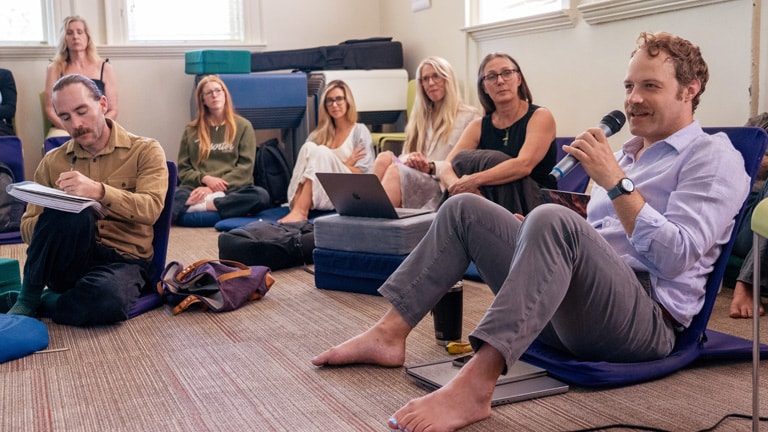
The Graduate Certificate in Mindfulness-Based Counseling allows graduates to build dual competencies in foundational clinical practice and specialized mindfulness interventions, preparing them to integrate spiritual and contemplative perspectives into a variety of therapeutic settings.
The curriculum offers experiential and theoretical study that joins spirituality and clinical mental health counseling through methods such as meditation, Gestalt awareness, and client-centered counseling. Together, these methods challenge students to engage in deep inner personal exploration as well as focused relational work with others. Exploration of the psychotherapeutic process is balanced with personal reflection and shared observations with peers and instructors. By emphasizing the integration of traditional and innovative contemplative methods, the certificate provides students with a rich foundation for future clinical service.
- CNST-622 Foundations of Mindfulness (3)
- CNSM-671 Mindful Counselor (3)
- CNSM-602 Gestalt I (3)
- CNSM-651 Gestalt II (3)
Transpersonal Counseling
Low-residency & Residential: 12 credits
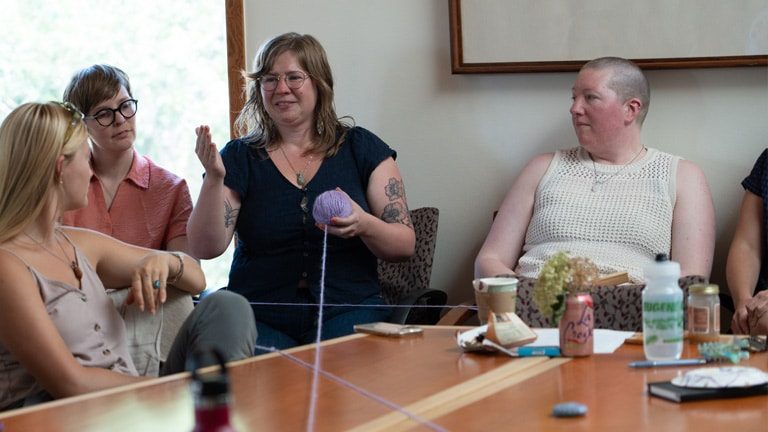
The Graduate Certificate in Transpersonal Counseling allows graduates to build dual competencies in foundational clinical practice and specialized transpersonal interventions, preparing them to integrate spiritual, expansive, and contemplative perspectives into a variety of therapeutic settings.
The curriculum offers experiential and theoretical study that joins spirituality, and clinical mental health counseling through transpersonal frameworks, Jungian approaches, Gestalt awareness, and client-centered counseling. Together, these methods challenge students to engage in deep inner personal exploration as well as focused relational work with others. Exploration of the psychotherapeutic process is balanced with personal reflection and an understanding of human consciousness beyond the ego. By emphasizing the integration of traditional clinical skills with innovative transpersonal methods, the certificate provides students with a rich foundation for facilitating holistic healing and self-actualization.
- CNST-670 Transpersonal Counseling (3)
- CNST-673 Jungian Approaches to Counseling (3)
- CNST-775 Advanced Topics in Transpersonal Counseling (3)
- Transpersonal elective of choice (3)

Buddhism-Informed Contemplative Counseling
Residential: 14 credits
The Graduate Certificate in Buddhism-Informed Contemplative Counseling allows graduates to build dual competencies in foundational clinical practice and specialized Buddhism-informed interventions, preparing them to integrate mindfulness and compassionate presence into a variety of therapeutic settings.
Integrating traditions from clinical mental health counseling with the contemplative wisdom of Buddhism, the curriculum builds upon a pioneering approach to using meditation as a foundation for clinical training. The program challenges and supports students to recognize “brilliant sanity” in themselves and others, discovering compassionate presence as the ground for their clinical work. A strong value of the certificate is training counselors to work skillfully across cultural differences with awareness and humility. The curricular arc is designed to guide students on a journey of practice and study that leads to inner resilience, warmth, and a fundamental confidence in their capacity to help others.
Experiential learning is central to the curriculum. Students participate in process groups that take mindfulness-awareness practice into relationship, allowing them the opportunity to study their relational patterns in real time. Another hallmark of the program is the integration of maitri (a Sanskrit term meaning “unconditional friendliness”) meditation retreats and practices. These experiences emphasize sitting meditation while progressively incorporating practices designed to cultivate relational awareness, compassion, and emotional intelligence—most notably Maitri Space Awareness, originally designed by Naropa’s founder, Chögyam Trungpa Rinpoche.
- CNSC-603 Buddhist Foundations for Counseling I (Hinayana)(3)
- CNSC-660 Maitri I (SV and 4 foundations) (1)
- CNSC-665 Maitri II (intro to Buddha families) (1)
- CNSC-623 Buddhist Foundations for Counseling II (Mahayana)(3)
- CNSC-609 Interpersonal Dynamics Awareness Lab I (1)
- CNSC-760 Maitri III (Buddha families and clinical applications) (1)
- CNSC-629 Interpersonal Dynamics Awareness Lab II (1)
- CNSC-803 Buddhist Foundations for Counseling III (Varjayana)(3)
Why Choose Naropa?
Mindfulness Focus
Naropa’s mindfulness approach intersects with all Clinical Mental Health Counseling Concentrations. We see meditation as a powerful tool for helping aspiring professionals find their place in an increasingly complex society. We practice contemplative education, which means that we value the whole person (mind, body, and spirit) and seek to attend to the whole person during the educational experience.

Experiential Learning
Another important accent of contemplative education is its focus on first-hand experience. In addition to learning about concepts, we place students into direct experience and engagement with the subject matter, so they can “see for themselves.” Thus, a Naropa education is highly experiential.
Eastern & Western Wisdom Traditions
Naropa promotes a holistic approach to counseling that blends world wisdom traditions, Western approaches to mental health, and multicultural education. We believe there is a unique opportunity for utilizing contemplative practices within work for social justice. The two are mutually supportive and beneficial. Our graduates are uniquely prepared to face the challenges of a changing world and its multiple perspectives.

How this Program Prepares You
Robust Clinical Foundation
The program delivers an essential 48-credit CACREP-aligned core. This ensures you are fully prepared for LPC/LPCC licensure in Colorado and most other states.
Specialized Niche Expertise
You are empowered to build your unique clinical identity through flexible electives or specialized certificates. This dual approach gives you a highly competitive edge in the modern counseling landscape.
Versatile Career Readiness
Graduates are equipped with both traditional and holistic modalities. You will be ready to thrive in private practice, community mental health, and specialized treatment centers.
Program Learning Outcomes
Demonstrate mastery of core professional counseling curriculum.
Demonstrate proficiency in clinical counseling, diagnostic skills, and multicultural & social justice counseling competencies.
Demonstrate professional competency in all academic and clinical courses.
Career Opportunities with a Clinical Mental Health Counseling MA Degree
By the end of your three-year journey, you will be fully prepared to step into the field in a variety of clinical and educational settings.
Career opportunities include:
- Licensed Professional Counselor (LPC)
- Licensed Professional Counselor Candidate (LPCC)
- Private Practice Therapist
- Community Mental Health Counselor
- Specialized Treatment Center Clinician
Faculty Highlight

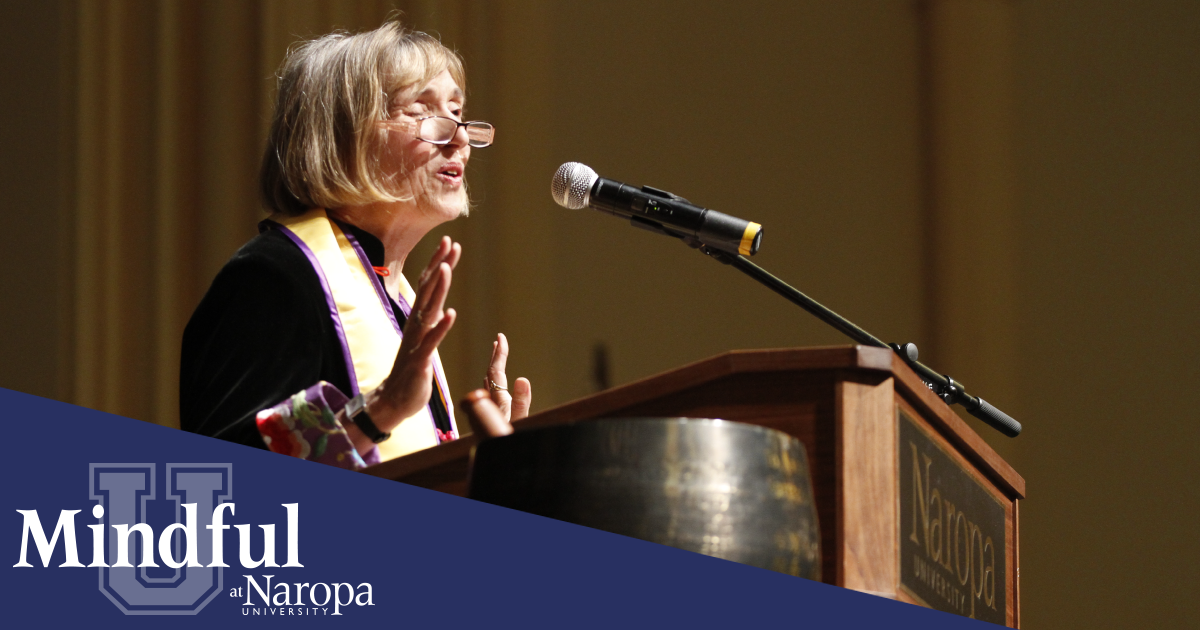
[Students] get the broad stroke to know how to be clinicians in the field, how to be professionals. And they get this concentration of study that is unique, […] that you can’t get anywhere else in the country. […] So they get the basic grounding in the field and they get to do something so unique and interesting that gives them confidence and what I’d like to call a sustainable degree.

FAQS about the MA in Clinical Mental Health Counseling
What can you do with a Master's in Clinical Mental Health Counseling?
How do I obtain Professional Counseling Licensure?
Licensure and accreditation requirements vary across the United States and internationally. To practice Clinical Mental Health Counseling in Colorado, individuals must have a master’s level education and register through the State Board of Licensed Professional Counselors, as well as fulfill a series of requisites. To obtain information about licensure in other states, see our State Authorization Federal Regulations Resource.
What sets Naropa’s Clinical Mental Health Counseling Degree apart from other programs?
Naropa’s Clinical Mental Health Counseling Degree includes areas of emphasis (e.g., mindfulness-based modalities, transpersonal awareness, and contemplative pedagogy) that are not available anywhere else in the country.
Learn More About the Clinical Mental Health Counseling Program
Reach out to Junia McGillen if you are interested in the CMHC program with a Somatic Counseling certificate, a Dance/Movement Theories & Practice Certificate, a Nature-Based Counseling certificate, a Buddhism-informed Counseling Certificate, or if you plan to take electives.

Connect with your counselor
Junia McGillen
Admissions Counselor
- Schedule a Meeting
- junia.mcgillen@naropa.edu
- (303) 276-6005


Connect with your counselor
Junia McGillen
Admissions Counselor

Reach out to Melanie Noble if you are interested in the CMHC program with a Mindfulness-Based Counseling certificate or a Transpersonal Counseling Certificate.

Connect with your counselor
Melanie Noble
Admissions Counselor
- Schedule a Meeting
- melanie.noble@naropa.edu
- 303-546-3568

Connect with your counselor
Melanie Noble
Admissions Counselor
- Schedule a Meeting
- melanie.noble@naropa.edu
- 303-546-3568
Ready to Apply?
Admission Requirements
At Naropa, we value both academic excellence and the willingness to carry out introspective work.
Learn more about admission requirements and the application process for the 60-credit MA in Clinical Mental Health Counseling.
Costs & Financial Aid
At Naropa, we believe quality education should be accessible. More than 75% of our graduate students receive some form of financial aid to help cover their costs. Our graduate costs & aid page covers costs and financial aid opportunities for graduate students, like scholarships, student employment, and loan options.
Graduate Scholarship Opportunities
Scholarships are a great way to help with the costs of going to school. Naropa University offers an array of scholarship opportunities to graduate students. Students may be eligible to receive scholarships by applying for scholarships or by being nominated for a scholarship.
For more detailed information about the different scholarships available and how to receive them, please review our graduate scholarship page.


Interested in Clinical Mental Health Counseling?
Read our blog & magazine or listen to our podcast!

Magazine
Magazine


Magazine