
Master of Arts in Transpersonal Art Therapy
Integrating transpersonal theory with a clinical approach to art therapy, Naropa’s MA degree in Transpersonal Art Therapy helps you—and your future clients—find healing through the transformative power of art-making.

About this Program
The foundation of this program is studio art, art-based clinical practice, integration of transpersonal theory, and opportunities for contemplative practice
Our clinically focused Transpersonal Art Therapy program exists to prepare Art Therapists in the cognitive (knowledge), psychomotor (skills), and affective (behavior) learning domains.
This program prepares students to work in the counseling field as Art Therapists, Creative Art Therapists, Counselors, and other professional career tracks. Learn more about professional licensure tracks with this degree.
Community Engagement
Naropa’s Transpersonal Art Therapy graduate degree is dedicated to developing socially engaged art therapists. Students connect with the community through practicum and internship, offering art-based counseling services in a variety of clinical settings. The Naropa Community Art Studio (NCAS) teaches residential students an open-art studio model in which they are mentored by Art Therapists in the community. In our low-residency model of the program, students get exposure to NCAS during their intensives; additionally, they work directly with populations within their home communities throughout their practicum and internship courses.
Social Justice Focus
Being a counselor requires awareness of one’s own social context, and the social context of those we serve. Naropa’s Transpersonal Art Therapy graduate program requires art therapists-in-training to take courses with a social justice and multicultural approach.
Expert Faculty & Staff
Naropa’s Transpersonal Art Therapy graduate program hosts published authors, accomplished artists, and community innovators with extensive art-based clinical experience. Our Clinical Mental Health Counseling courses are led by faculty from across the Naropa community, providing exposure to multidisciplinary approaches and pedagogies.

Quick Facts
- Delivery Formats: Hybrid & On-Campus
- 60 credit-hour three-year program
- Accredited by the Commission on Accreditation of Allied Health Education Programs (On-campus program only)
- Data on Retention Rates, Graduation Rates & Employment
- Community-focused Social Engagement Integrated into Curriculum
- 3 Years of Studio Art & Clinical Experience
- 700+ Supervised Clinical Hours
- Expert Faculty & Staff
- Applications open for Fall 2027

Pending Approval from the U.S. Department of Education
Although the program has been approved by the Higher Learning Commission, Naropa is awaiting final approval from the U.S. Department of Education before the program can participate in federal financial aid programs. At this time, students enrolled in this program are not eligible to receive federal student loans, federal grants, VA education benefits, or institutional aid from Naropa.
Program Format
The Transpersonal Art Therapy degree has two models of study: a three-year hybrid program and a three-year on-campus degree.
It consists of specific art therapy coursework combined with counseling and transpersonal studies to prepare competent entry-level art therapists.
Students in the on-campus program will have studio art woven throughout their classroom experience. During intensives for the hybrid program, students will engage in studio art in the Front Range of Colorado.
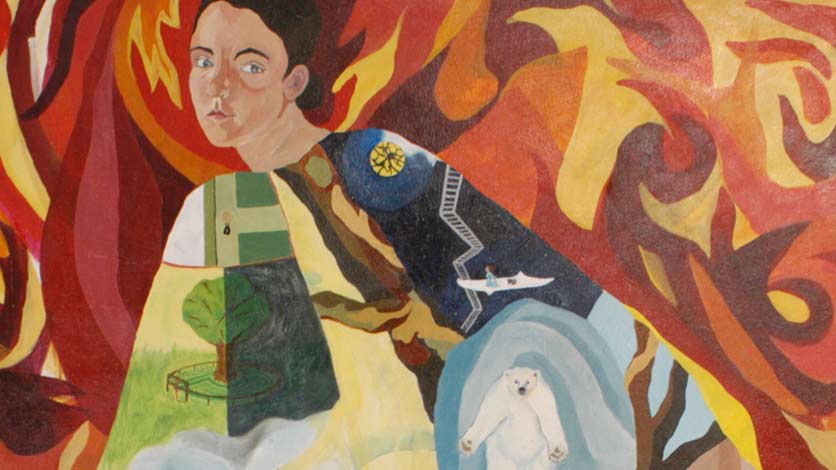
Course Spotlight
Internship Art Studio Methods
This course complements core Internship Coursework through an open studio model. By integrating creative arts self-inquiry with contemplative practice, students will carefully examine their fieldwork experience using a variety of artistic modalities, tools, and materials. Students will explore transference and countertransference, parallel process, projective identification response, art making, self-care, ethics, and professional role identity. Students are encouraged to engage deeply with personal and transpersonal imagery as an essential part of contemplative models for practicing studio art therapy.
Degree
Requirements
The Transpersonal Art Therapy MA degree is a 60-credit program. Besides completing regular coursework, students are required to complete a Counseling Practicum during their second year, to develop their counseling skills through fieldwork at a community agency with on-site supervision. During their third year, students will complete a 700-hour clinical field placement with on-site supervision.
Students in the hybrid model of the program must attend three intensives in Boulder, Colorado, throughout their three years of study. Learn more about the hybrid requirements of the program.
MA in Transpersonal Art Therapy Requirements
- CMHC-600, Foundations and Orientation of Clinical Mental Health Counseling (3)
This course must be taken in the students’ first or second semester of enrollment. Topics include philosophy and identity of the counseling profession, professional roles, settings and functions, ethics, history, legislative policies, systems, prevention programs, interventions, social justice and multicultural counseling competencies, fiscal, technology, community resources, consultation, counseling supervision, advocacy, assessment, and evaluation. - CMHC-601, Social/Multicultural Foundations (3)
This survey course explores the role of the counselor embedded in the milieu of the social and cultural realities of society. Topics concerning work with families from diverse cultures are discussed, including the counselor’s role in social justice, advocacy and conflict resolution, cultural awareness, the nature of biases, prejudices, processes of intentional and unintentional oppression and discrimination, and other culturally supported behaviors that are detrimental to the growth of the human spirit, mind, or body. - CMHC-603, Counseling and Helping Relationships I (3)
Introduction to counseling theories, core skills, and the professional practice of counseling. Topics include current counseling theories, social justice and multicultural counseling competencies, basic attending, compassion, nonjudgmental states, and legal and ethical considerations. Methods of instruction include in-class roleplay, integration of peer and faculty feedback, and skill practice with peers. - CMHC-602, Human Growth and Development (3)
The study of human development from prenatal experiences through the life span. Topics include individual and family development, theories of learning, personality development, motivation, and neurobiological basis for behavior. Students explore developmental crises, transitions, disabilities, situational, cultural, and environmental factors impacting behavior. Models of resilience are examined. - CMHC-606, Legal and Ethical Aspects in Counseling (3)
This course explores the interrelationship of and duties extending from the ethical standards and legal regulations governing professional counseling and clinical mental health counseling. Based on the American Counseling Association ethical standards, mental health laws, regulation, litigation and legal regulation are examined in regard to professional practice. - CMHC-607, Diagnosis and Treatment Planning (3)
An advanced overview of clinical thinking and perspectives related to assessment, diagnosis, and treatment planning. Counselors utilize the latest edition of the Diagnostic and Statistical Manual of Mental Disorders as a guide to frame diagnostic thinking. Topics include basic psychopharmacology, psychosocial modalities, evidence-based practice, and recovery strategies. - CMHC-609, Research and Program Development (3)
An introduction to research methods and program evaluation applied to professional counseling. Topics include philosophical issues in research, importance of research, opportunities, and difficulties of conducting research. Research designs including qualitative, quantitative, single-case, action, and outcome-based are explored. - CMHC-608, Assessment (3)
This course provides an overview of individual and group approaches to assessment and evaluation. Topics include standardized and non-standardized testing, assessment techniques (inventories, observations, and computer-managed methods), report writing, psychometric properties, special consideration for unique populations, case conceptualization, legal and ethical issues, intersectionality, and selection of assessments based on client needs and identities. - CMHC-611, Substance Abuse and Addictions Counseling (3)
The physical, mental, emotional, and spiritual aspects of alcohol and drug dependency and other addictive behaviors are explored. Assessment, therapeutic techniques, intervention, and treatment modalities are discussed. Students explore the contributions, as well as the strengths and weaknesses, of 12-step and other self-help recovery groups. The interrelationships of alcohol and drug abuse and other addictive behaviors with attachment and bonding disruptions in early childhood and childhood trauma are also investigated. Lecture, discussion, role-play, and other experiential techniques are used. - CMHC-610, Career Counseling (3)
This course addresses career counseling, career planning, and adult transition from a holistic and transpersonal point of view. Students learn the central theories of career development. Key assessment instruments for life/career planning and decision-making are reviewed. Career counseling skills and processes are explored, including those applicable to specific populations. Topics include the interrelationships between work, family, and other life roles, including the role of social location in career development. Ethical and legal considerations, career development programming and evaluation, occupational and labor market information, and web-based resources are studied. - CNSA-600, Orientation Seminar—Transpersonal Art Therapy (15 hours/online) (0)
This orientation seminar is designed to give new students a thoughtful and appropriate introduction to their cohort and to the graduate Transpersonal Creative Arts Counseling concentration. This orientation experience provides an opportunity for the incoming class to meet the concentration faculty and academic advisor and to experience an introduction to the Transpersonal Creative Arts Counseling concentration. There is discussion on how meditation is seated in the program, the academic standards expected within the program, and resources for succeeding in the program, including navigating the library, ways of thinking about diversity, contemplative education, and the importance of a personal artist identity. - CNSA-634, History and Theory of Art Therapy (3)
Students explore various historical and current theoretical trends in art therapy and creative arts counseling, focusing on the contributions of early pioneers and contemporary practitioners. Various approaches to the practice of art therapy and creative arts counseling are highlighted (depth psychology, humanistic, Gestalt, cognitive/behavioral, phenomenological, developmental, archetypal) with specific attention devoted to models of contemplative and transpersonal counseling, creativity, future trends, and strategies to employ when looking at and responding to artwork within the therapeutic relationship. - CNSA-605, CHR II ( Art Therapy /Counseling) (3)
- CNSA-604, Foundations of Transpersonal Art Therapy in Counseling (3)
This course focuses on studio foundations in art therapy and creative arts counseling by investigating numerous in-class art assignments. The foundations course work examines practical applications of art therapy and creative arts counseling that focus on the therapeutic relationships and various artistic techniques that support change and transformation. Development of observation and therapeutic communication/counseling skills are stressed throughout the semester. The material covers basic information on how to set up, manage, and fund an art studio. During the semester, students fulfill fifty service hours in the Naropa Community Art Studio. Active participation in socially engaged, community-based arts, along with service-learning values, is a key aspect of the course. - CNSA-606, Group Counseling (Art Therapy/Counseling) (3)
- CNSA-734, Art Therapy with Children & Adolescents (3)
This course provides an examination of the psychological, psychosocial, cultural, cognitive, creative, and spiritual development of children from birth through adolescence to age nineteen as it relates to the practice of counseling and art therapy. Through readings, discussion, practice sessions with children, experiential exercises, and assignments, students focus on understanding development and assessment, including art-based assessments, attachment theory, approaches to treatment, cultural competency, and the practice of counseling and art therapy with a variety of child and adolescent populations. Prerequisite: CNSA-751. - CNSA-620, Counseling Practicum (Art Therapy/Counseling) (3)
- CNSA-612, Art Therapy with Couples, Partners, & Family Counseling (3)
- CNSA-622, Internship I (Art Therapy/Counseling) (3)
- CNSA-625, Internship Art Studio Methods (3)
This course complements core Internship Coursework through an open studio model. By integrating creative arts self-inquiry with contemplative practice, students will carefully examine their fieldwork experience using a variety of artistic modalities, tools, and materials. Students will explore transference and countertransference, parallel process, projective identification response, art making, self-care, ethics, and professional role identity. Students are encouraged to engage deeply with personal and transpersonal imagery as an essential part of contemplative models for practicing studio art therapy. - CNSA-623, Internship II (3)
Why Choose Naropa?
Heading

Agency Network
For our on-campus program or for students in Colorado, Naropa has an extensive network of human service agencies where students can carry out their practicum and field placements. In addition to acquiring real work experience and developing their skills, students can connect with professionals and institutions in the field. Our hybrid program offers the flexibility and convenience of completing field placement in students’ home communities.
Licensure Support
Naropa provides Credentialing and Licensure support to students who want to obtain licensure or credentialing to practice Clinical Mental Health Counseling, even post-graduation

How this Program Prepares You
Real-life professional experience
Field placements provide real-life scenarios in which students apply their knowledge and skills in a professional setting and capacity, allowing them to develop and improve their counseling abilities.
Transdisciplinary approach & skill set
As a transdisciplinary profession, art therapy involves intensive studies in the visual arts, the behavioral sciences, and the development of adept counseling skills. Students become culturally competent, clinically astute, socially engaged counselors, artists, and art therapists.
Comprehensive & multifaceted program
The program provides training grounded in rigorous academic work, the practices of critical thinking and contemplation, and the skillful application of effective clinical skills. As such, the program is well-rounded in all critical areas that pertain to the professional formation of art therapists.
Learning Outcomes
Students will demonstrate an ability to utilize subjective investigation with objective research methods.
Students will demonstrate applied art therapy and counseling knowledge as it pertains to case conceptualization skills.
Students will demonstrate applied knowledge of diversity awareness and social engagement within art therapy and counseling practice.
Students will demonstrate the clinical application of a transpersonal approach to art therapy.
Career Opportunities for Transpersonal Art Therapists
Alumni of this program become art therapists and mental health clinicians who treat the whole person through a transpersonal, social justice lens. Build a fulfilling career that weaves your passion for studio art with your desire to help others. Career opportunities for MA Transpersonal Art Therapy graduates include:
- Art Therapist: support clients with visual-art-based therapeutic services.
- Mental Health Counselor: offer therapy services to improve well-being.
- Substance Abuse and Behavioral Disorder Counselors: aid patients in their recovery.
- Social and Human Service Assistant: aid people and communities in need.
Hear from a Graduate

[A Transpersonal Art Therapy perspective] takes all information into account, even the data that we can’t define, even the things we don’t have words for, even the things that seem to only exist in felt sense, even the things that seem impossible; and that type of approach allows for healing that goes deeper than some approaches have ever dared to brave.

FAQS about the MA in
Transpersonal Art Therapy
What is Transpersonal Art Therapy?
Written by Michael A. Franklin, PhD, ATR-BC
Transpersonal psychology is viewed within the graduate art therapy program as an evolving, researched discipline that integrates established models of psychology with valuable subjects from spiritual disciplines and wisdom traditions. This transdisciplinary assimilation, which strives to prevent cultural appropriation, results in a comprehensive model of psychology.
Transpersonal Art Therapy draws on this wide ranging premise through its core value to embrace the imaginal elements of the creative process as a rich healing opportunity. Any artistic act is a sample of multiple behaviors (cognitive, affective, kinesthetic, contemplative and spiritual), leading to the awareness that to form materials and processes is to transform oneself through art—we can literally create our way out of and through our suffering. The living image that results from the art process is the true teacher of this path. An art therapist working within the transpersonal approach strives to remain open to differences and to work for change at personal, cultural, institutional, and spiritual levels of transformation. Overall, this work is offered with empathic intentions, compassion for self and other, and the desire to transformatively serve communities and larger social systems.
Is this degree available online?
This degree offers both an on-campus and a hybrid model. In our hybrid model, students complete their coursework online and come to Boulder, Colorado, three times throughout their course of study. Learn more about the hybrid intensive model here.
What are the benefits of Transpersonal Art Therapy?
Transpersonal Art Therapy benefits both individuals and communities. The benefits include self-reflection and self-awareness, improvement of self-esteem, confidence, interpersonal skills, and creativity. This type of counseling also enhances the connection between body and mind and helps clients develop healthy coping mechanisms and better interpersonal skills, among other things. Participating in creative processes engages multiple brain regions simultaneously; it reduces stress, anxiety, depression, and fatigue. It has a positive effect on both mental and physical health.
What is specific to the Transpersonal Art Therapy program?
Transpersonal Art Therapy draws on a discipline with a well-documented history. It refers to an approach that incorporates transpersonal psychology: a discipline that integrates psychology with spiritual disciplines and wisdom traditions. Transpersonal Art Therapy uses both art and image to support the healing process. The term “transpersonal” encompasses a broad spectrum of practices that connect artistic self-expression with healing.
Learn More About the Program

Connect with your counselor
Junia McGillen
Admissions Counselor
- Schedule a Meeting
- junia.mcgillen@naropa.edu
- (303) 276-6005



Connect with your counselor
Junia McGillen
Admissions Counselor

Ready to Apply?
Admission Requirements
As an institution founded on the values of academic excellence and contemplative practice, Naropa University values both academic performance and the willingness to carry out introspective work.
Learn more about admission requirements and the application process for the MA in Transpersonal Art Therapy.
Costs & Payment Options
At Naropa, we believe quality education should be accessible to all. Learn more about costs and payment options.
Graduate Scholarship Opportunities
Scholarships are a great way to help with the costs of going to school. Naropa University offers an array of scholarship opportunities to graduate students. Students may be eligible to receive scholarships by applying for scholarships or by being nominated for a scholarship. For more detailed information about the different scholarships available and how to receive them, please review our graduate scholarship page.


Interested in Transpersonal Art Therapy?
Read our blog or listen to our podcast!
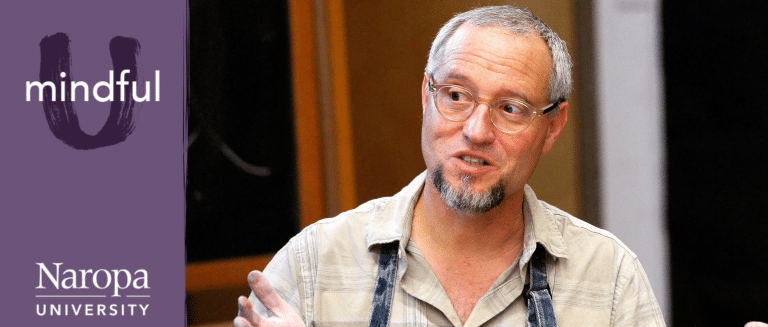
The latest episode of our podcast is available at Mindful U, Apple, Spotify, and Fireside now! In this episode, Michael Franklin, PhD—author, professor, and former chair of Naropa University’s graduate...

Magazine

Magazine

Mindful U Podcast 101. Jen Berlingo: Midlife Emergence Today’s episode of our podcast is available at Mindful U, Apple, Spotify, and Fireside now! Naropa Alumnx, Jen Berlingo, MA, LPC, ATR...


